 Image 1 of 4
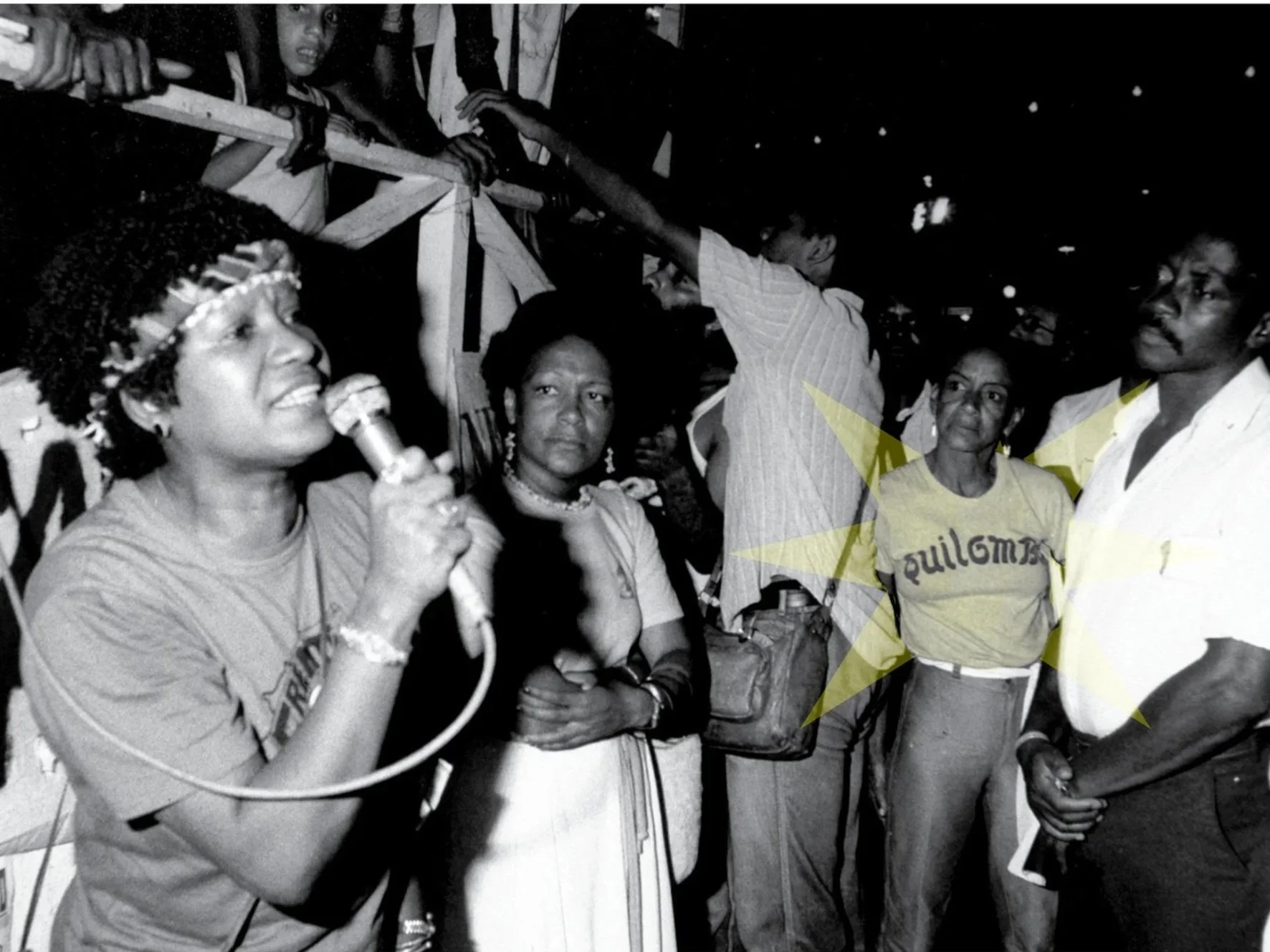 Image 2 of 4
 Image 3 of 4
 Image 4 of 4
Palmares held for most of the seventeenth century in what is now the state of Alagoas, Brazil — the largest and longest-surviving of the settlements built and defended by people who had absconded enslavement. From the Kimbundu kilombo, the word names a community formed by people who freed themselves and held ground together.
Quilombo is the name for a practice that repeated itself across the Black Atlantic wherever land could hide people and people could hold each other: in Brazil's interior, in Jamaica's Cockpit Country, in the Great Dismal Swamp along the Virginia and Carolina border, in Suriname's river settlements. Different places, different languages, the same determination.
In Brazil today, quilombola communities hold legal land titles won through generations of organizing and continue cultural and agricultural practices that trace directly back to those original settlements.
Archival Inspo: Lélia González — philosopher, anthropologist, and co-founder of the Movimento Negro Unificado — addressing a rally in Sao Paulo, Brazil in 1983. Photograph © Januário Garcia, courtesy Acervo do Fotógrafo Januário Garcia (preserved by Instituto Moreira Salles & Arquivo Edgard Leuenroth / Unicamp).
Palmares held for most of the seventeenth century in what is now the state of Alagoas, Brazil — the largest and longest-surviving of the settlements built and defended by people who had absconded enslavement. From the Kimbundu kilombo, the word names a community formed by people who freed themselves and held ground together.
Quilombo is the name for a practice that repeated itself across the Black Atlantic wherever land could hide people and people could hold each other: in Brazil's interior, in Jamaica's Cockpit Country, in the Great Dismal Swamp along the Virginia and Carolina border, in Suriname's river settlements. Different places, different languages, the same determination.
In Brazil today, quilombola communities hold legal land titles won through generations of organizing and continue cultural and agricultural practices that trace directly back to those original settlements.
Archival Inspo: Lélia González — philosopher, anthropologist, and co-founder of the Movimento Negro Unificado — addressing a rally in Sao Paulo, Brazil in 1983. Photograph © Januário Garcia, courtesy Acervo do Fotógrafo Januário Garcia (preserved by Instituto Moreira Salles & Arquivo Edgard Leuenroth / Unicamp).